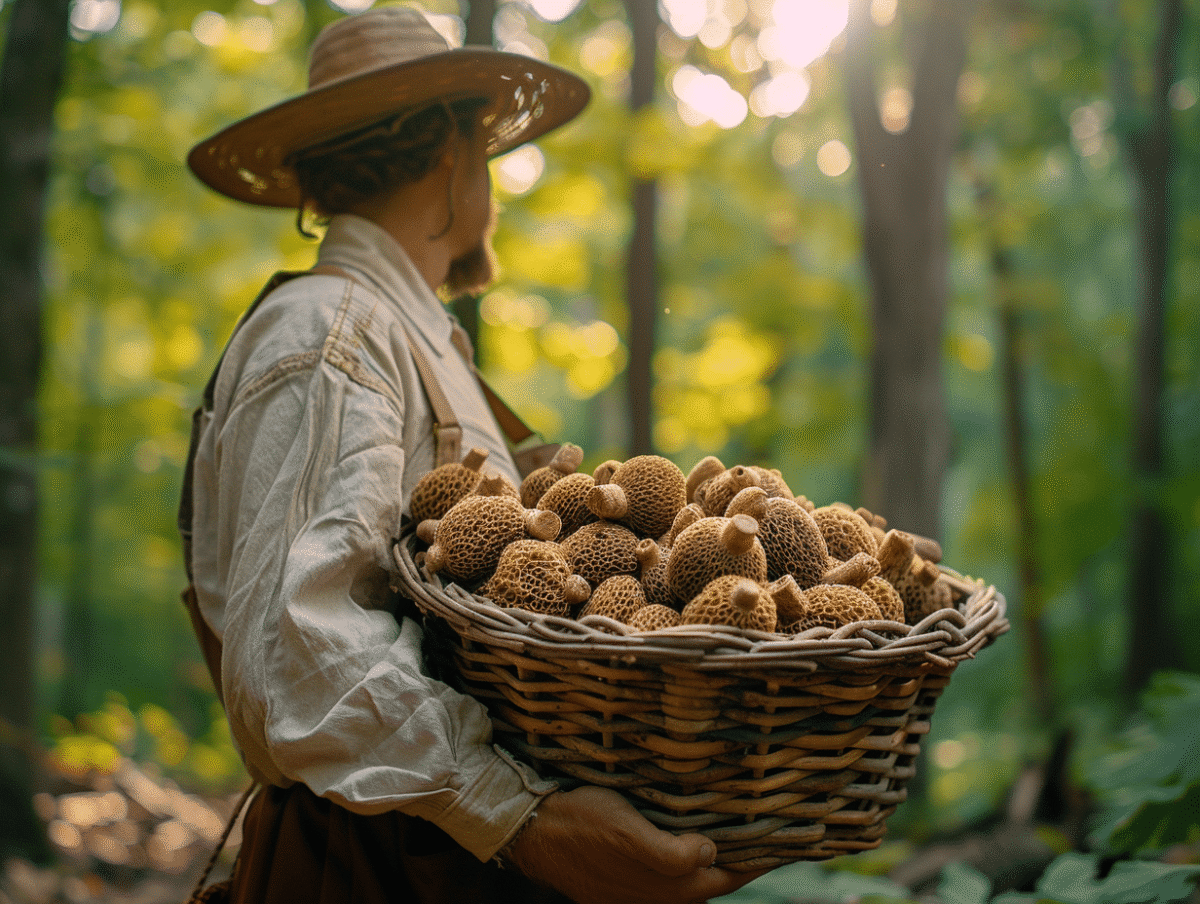
The picking of morels is a popular spring activity among mushroom enthusiasts and gourmets. These mushrooms, valued for their unique flavor, grow under very specific conditions, and their search can resemble a true treasure hunt. The success of this forest quest relies on a deep understanding of the habitat of morels, the techniques for searching and picking, as well as the safety measures to be followed. Tips from experts can turn a simple walk in the woods into a fruitful harvest. Here are some tips to maximize your chances of finding these precious mushrooms.
The secrets to a successful morel harvest
Know the terrain: Morels are wild mushrooms that thrive in cool, moist, and limestone-rich areas. To optimize your harvest, head towards these favorable habitats after periods of rain followed by sunny days. This specific biotope facilitates the development of morels, which respond positively to the thermal shock caused by these climatic conditions. The ideal season extends from spring to the first days of summer, during which cooler nighttime temperatures alternate with milder days.
Observe the signs of nature: Incorporate into your search the ‘5 tips for finding morels’. Watch for companion tree species, such as poplars, ashes, or elms, under which morels like to hide. Consider the climate: An alternation of wet and warm periods often heralds a fruitful harvest. Also examine the soil: The presence of mosses and forest litter is a good indicator. Pay attention to lunar cycles: Some experienced foragers emphasize a correlation between the phases of the moon and mushroom growth.
Use the right tools: Picking morels requires caution and respect for the environment. Equip yourself with a sharp knife to gently cut the stem of the mushroom without uprooting the base, which helps avoid damaging the mycelium and promotes regrowth. Choose a basket made of wicker that allows the spores of the morels to disperse as you move, thus contributing to the dissemination and proliferation of the species.
Preserve picking sites: The sustainability of morel beds relies on responsible harvesting. Do not trample the areas where you find morels, so as not to compromise the survival of the remaining mushrooms and their habitat. Respect nature and other foragers by only taking what you need and leaving enough mushrooms to ensure the regeneration of the bed. The morel, considered the caviar of mushrooms, deserves special attention so that its harvest remains a lasting pleasure for all.
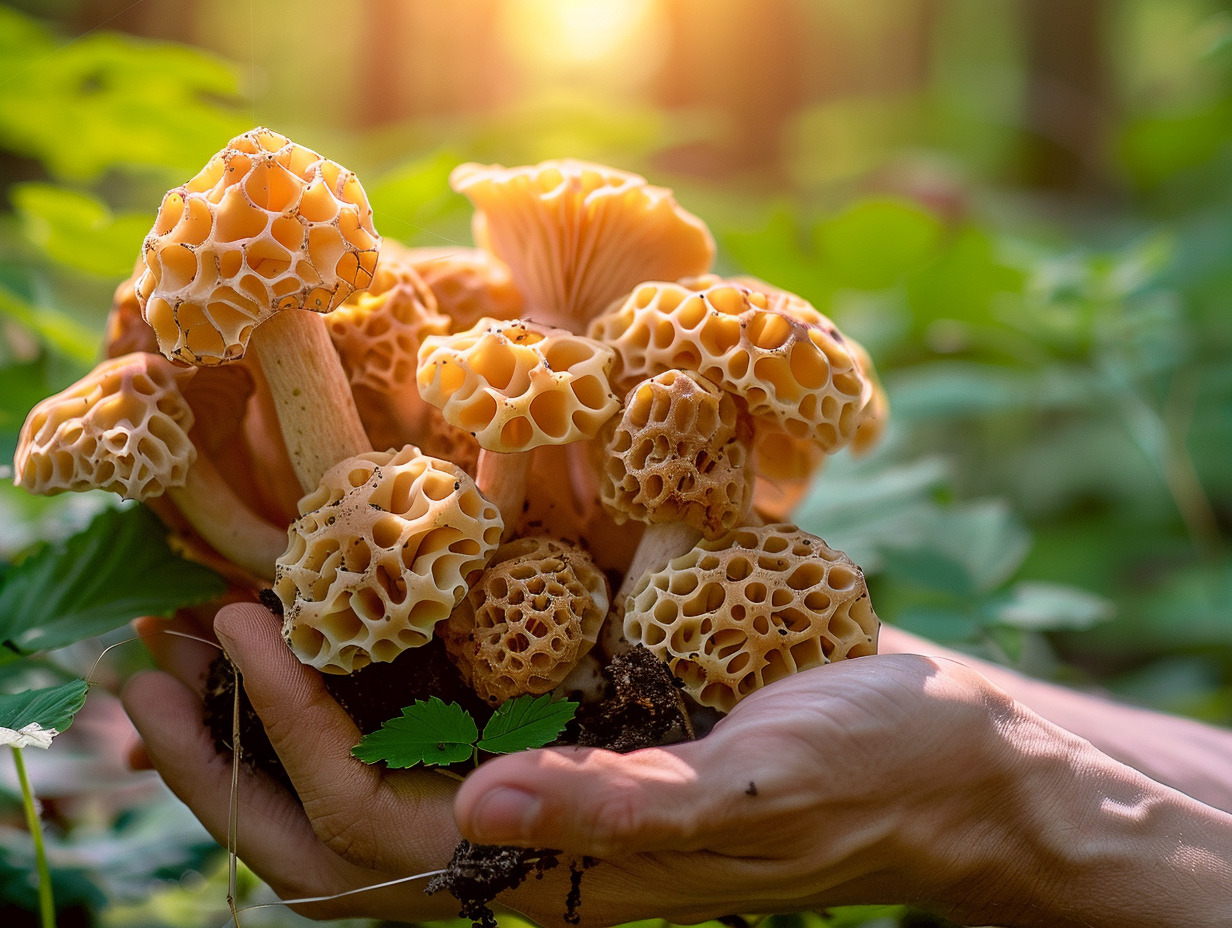
Preserving and consuming morels: best practices
The unknown toxicity of raw morels: Despite their gastronomic fame, morels contain inherent toxicity when consumed raw. This characteristic necessitates a thorough cooking before tasting. The potentially harmful compounds break down under heat, making the mushroom edible and flavorful. Therefore, respect this essential process to ensure safe consumption.
The golden rules for cooking morels: To neutralize any toxicity, prolonged and thorough cooking is imperative. Experts recommend a high temperature and a cooking time of at least 15 minutes. Whether sautéed, in sauce, or as a side dish, ensure that the morels are well cooked before serving. This step is fundamental to fully enjoy the taste qualities of this exceptional mushroom.
Optimal preservation for retained flavor: Once picked, morels must be handled with care to maintain their freshness and taste. Avoid washing them in large amounts of water; prefer gently brushing to remove dirt residues. Dry them quickly and store them in a cool, airy place or use preservation methods such as drying or freezing, which extend their shelf life without altering their quality.
Encourage future growth of morels: Morels are indicators of ecosystem health. By preserving fruit trees and other plants associated with their growth, you encourage the proliferation of morels. Understanding the factors that influence their development is essential for ensuring a fruitful harvest year after year. Contribute to the protection of these natural sites and ensure the abundance of future harvests.