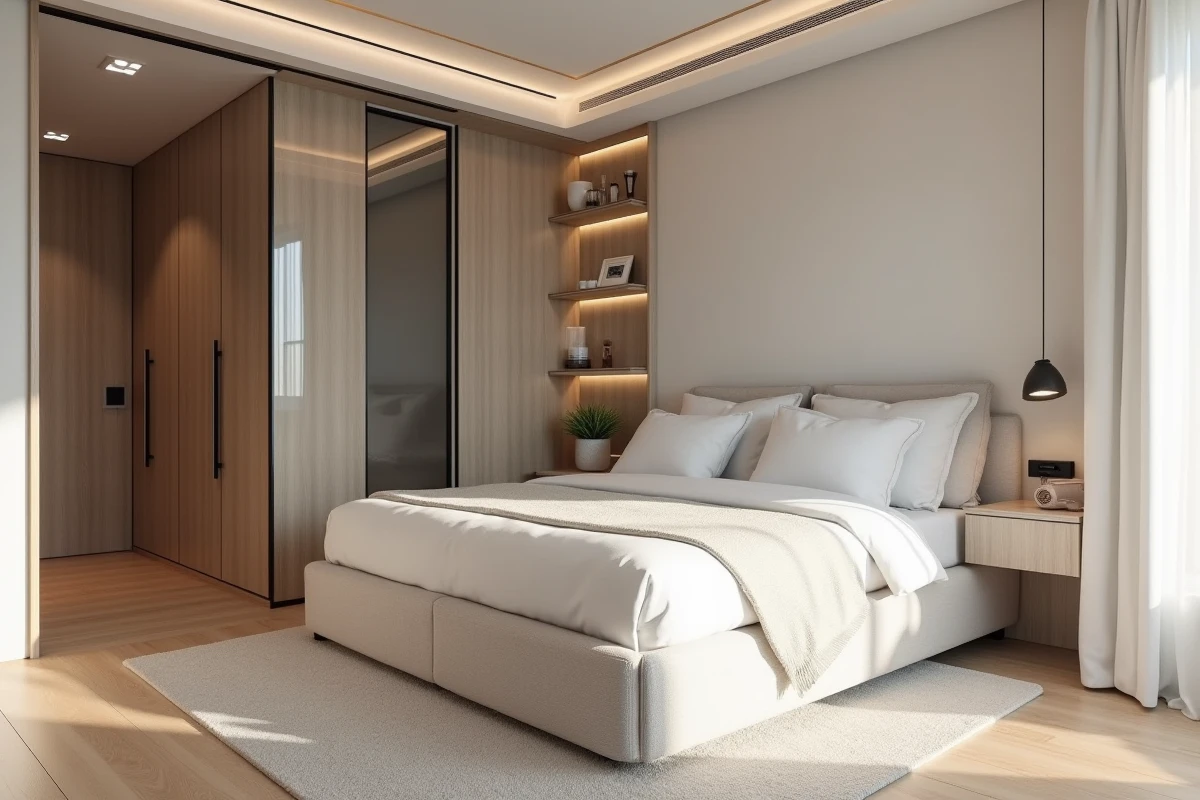
Designing a master suite in a 15m2 room requires accommodating a bed, storage space, and, if possible, a water area. The size necessitates clear decisions regarding furniture, circulation, and light. The ten suggestions that follow are based on concrete technical solutions, not just decorative intentions.
1. Bed on a platform with integrated storage underneath
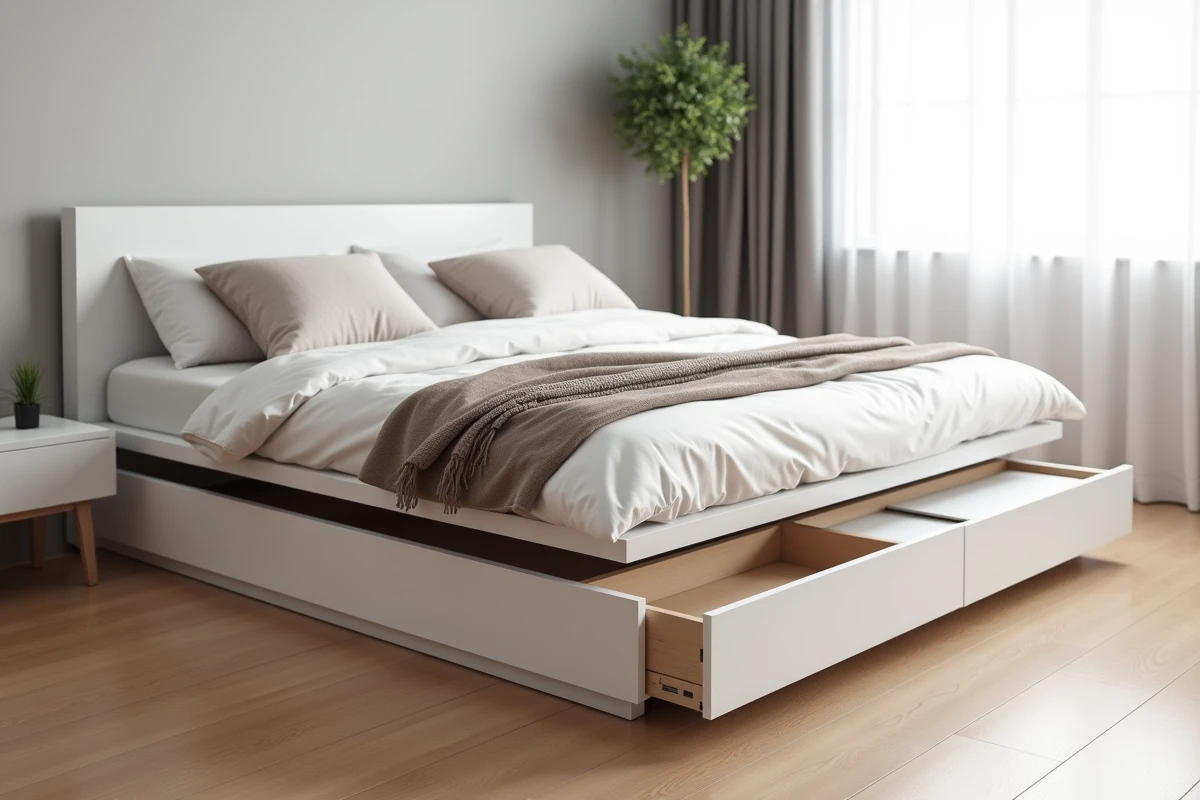
Raising the bed height by 35 to 45 cm allows for drawers or chests to be placed under the entire mattress surface. In a 15m2 master suite, this solution frees up the equivalent of an entire dresser without taking up any floor space.
The platform can be made from wood panels (birch plywood, OSB) and dressed to fit the room’s style. Opt for drawers mounted on full-extension slides for easy access to the back. If you’re looking for more layout ideas for a 15m2 master suite, choosing a platform remains one of the most space-efficient options.
2. Workshop-style glass partition to separate the water area without closing it off
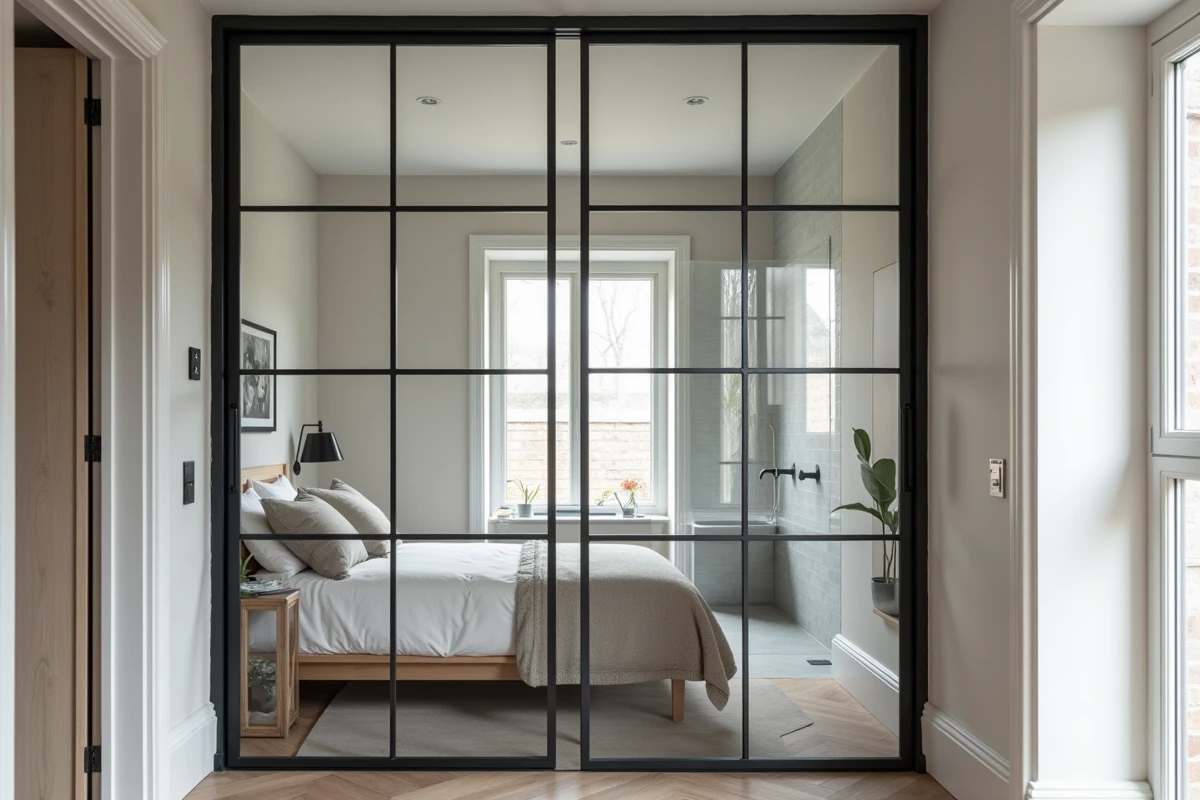
Installing a solid wall between the sleeping area and the shower blocks light and visually reduces the space. A workshop-style glass partition in steel or aluminum maintains transparency while defining the wet area.
Fixed models, without an opening part, are sufficient in most cases and are less expensive. For waterproofing, a tiled base of about 80 cm protects the bottom of the partition from water splashes. This lightweight and reversible partitioning solution is gaining popularity in small spaces, as it can be dismantled without leaving structural traces.
3. Pocket sliding door to eliminate swing space
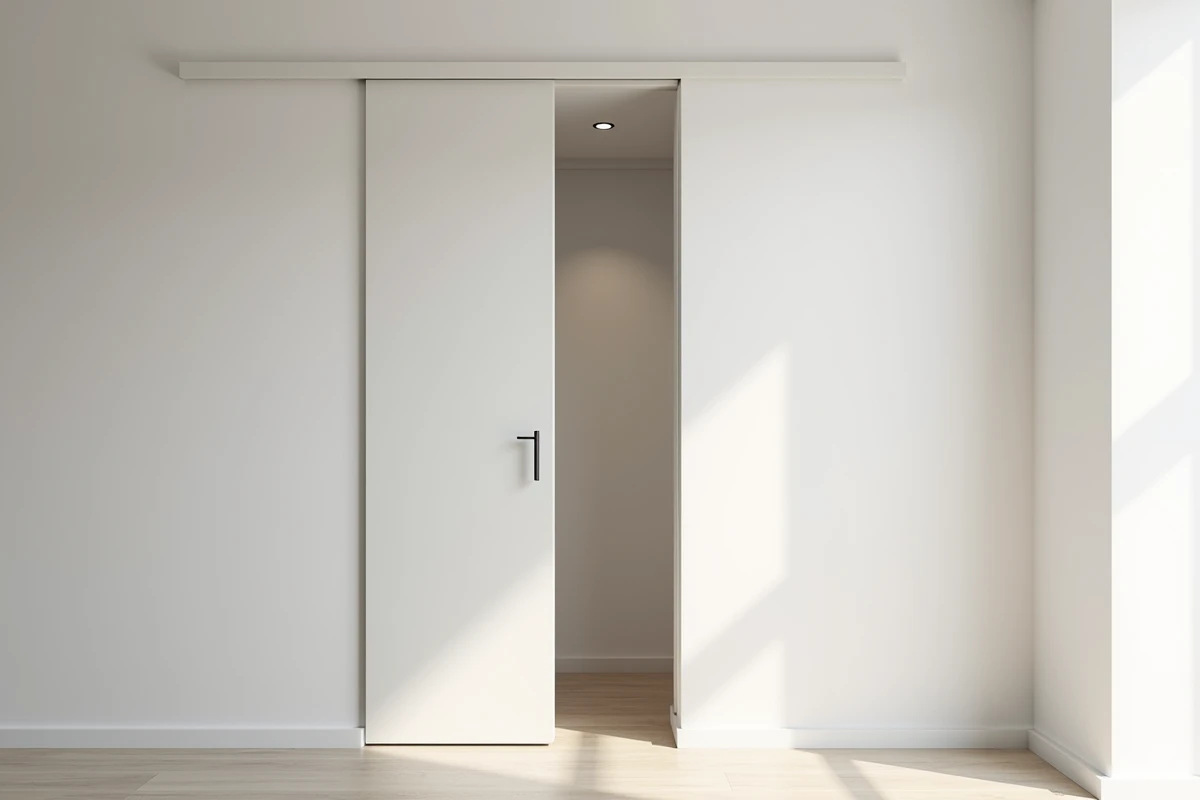
A standard hinged door takes up nearly a square meter of floor space when opened. In a 15m2 area, this swing space obstructs passage and prevents placing furniture in the corner. The pocket door disappears into the wall and recovers that lost space.
The installation requires a metal frame integrated into the wall (such as Eclisse or Scrigno), which means either rebuilding or slightly thickening the wall. The gain in circulation in a compact master suite justifies this construction constraint.
4. Multifunctional headboard with niches and integrated outlets
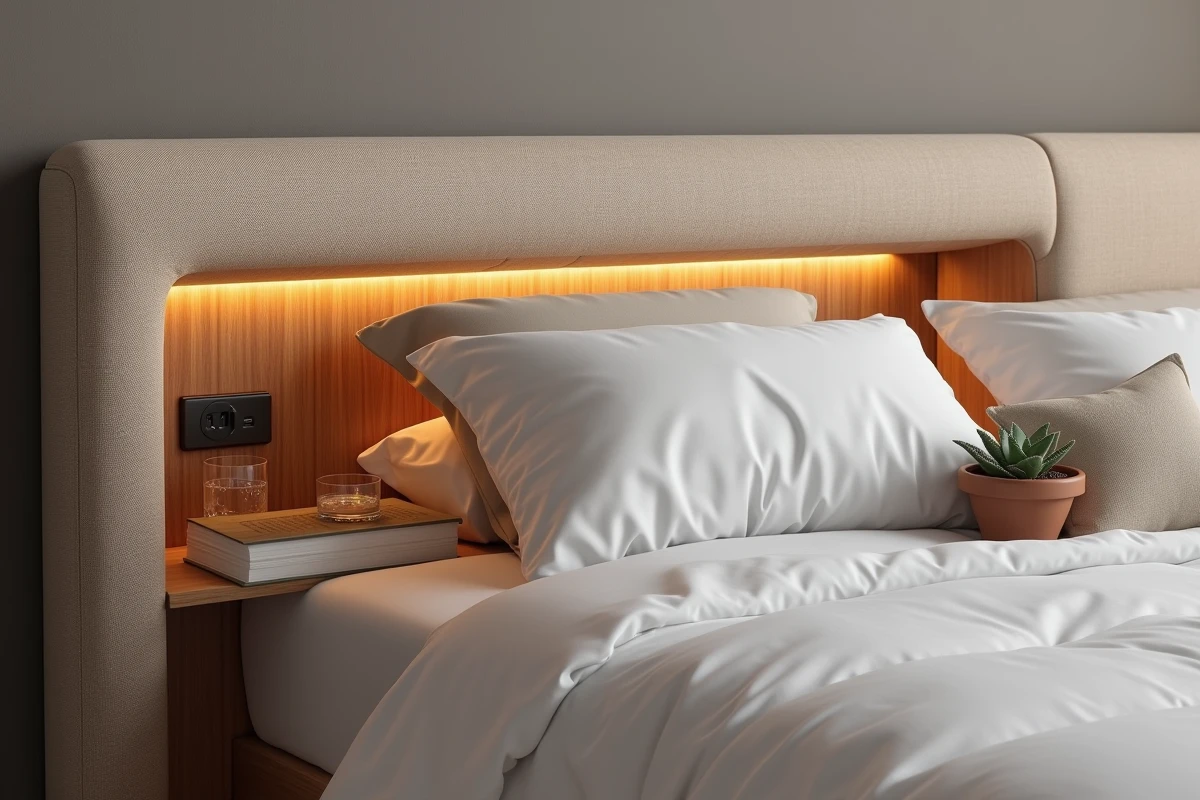
Removing traditional nightstands frees up space on either side of the bed. A thick headboard (15 to 20 cm deep) accommodates open niches, a built-in reading light, and USB outlets without any additional furniture.
The dual-purpose furniture replaces two to three separate items. Made to measure or from suspended cabinets, this headboard can also integrate indirect LED lighting, replacing the ceiling light and softening the ambiance of the sleeping area.
5. Light color palette with a single accent wall
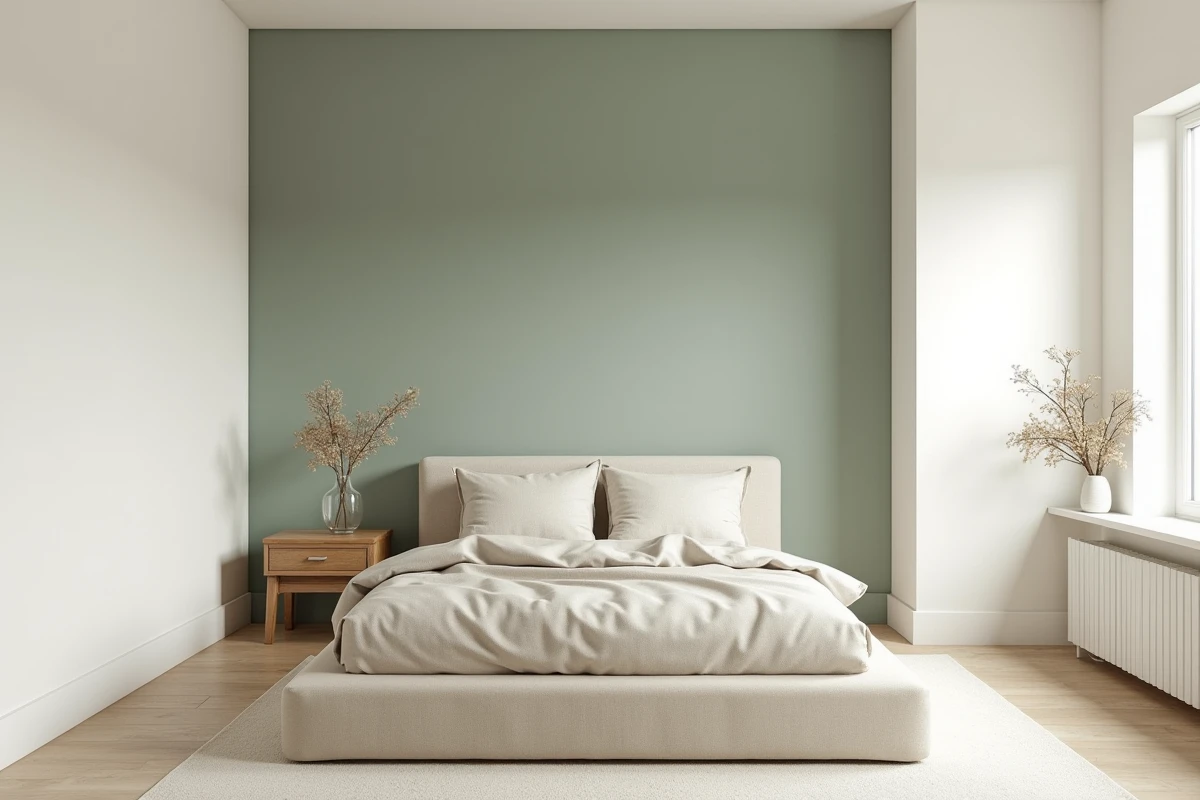
Painting all four walls in different or dark shades visually reduces volume. In contrast, a light background (off-white, linen, pearl gray) on three walls and a single accent wall behind the headboard adds depth without shrinking the room.
The accent wall can be painted in a bolder shade (navy blue, forest green, terracotta) or adorned with vertical light wood slats. This technique works because it directs the gaze to a unique focal point instead of dispersing it.
6. Linear dressing area behind a half-height partition
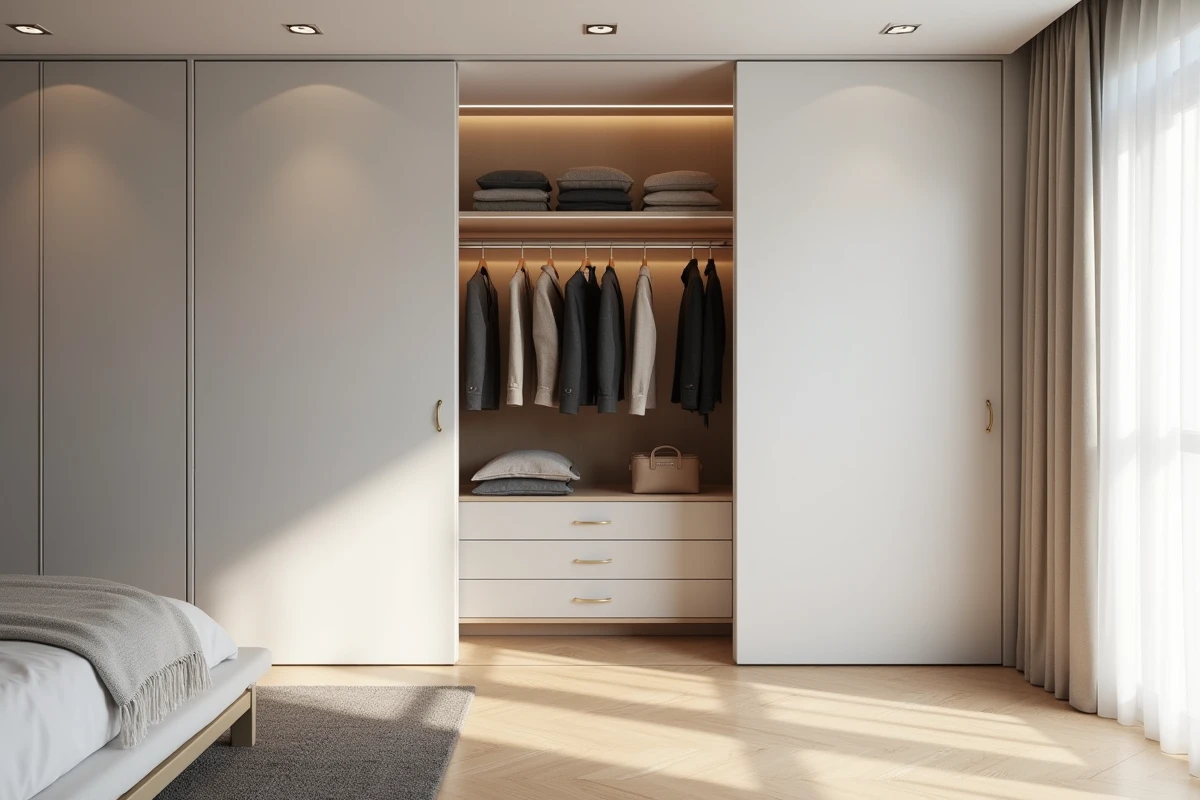
In a 15m2 room, a closed U-shaped dressing area is rarely feasible. A linear layout (a single row of hanging space and shelves) positioned behind a half-partition offers an effective compromise.
The partition, mounted at about 120 cm, conceals the laundry while allowing light to pass through the top. This setup creates a visual separation without suffocating the room. Allow for a depth of 60 cm for the hanging space, which still leaves comfortable circulation on the bed side.
7. Full-length mirror placed opposite the natural light source
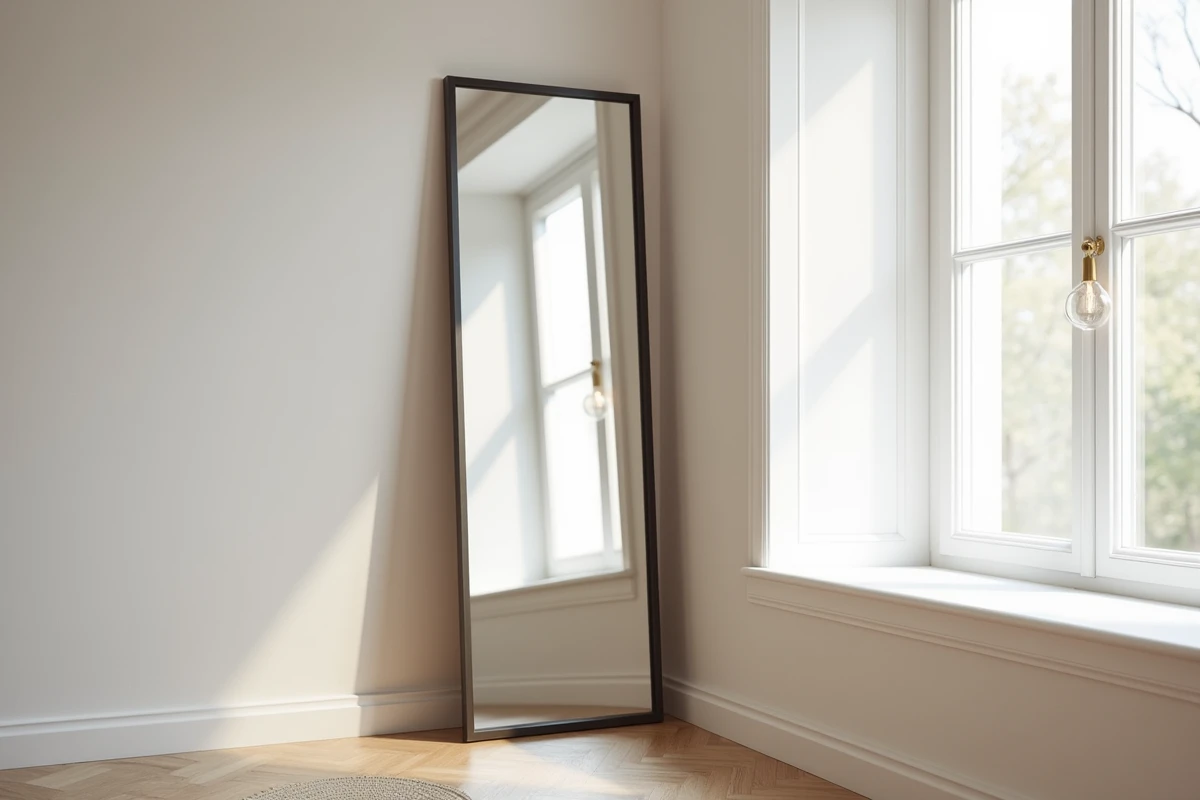
A large mirror, placed or fixed opposite the window, reflects natural light towards the back of the room. The visual enlargement effect is immediate and costs almost nothing.
Opt for a mirror at least 150 cm tall, finely framed so as not to weigh down the wall. Positioned opposite the light source, it doubles the perceived depth of the room. Avoid placing it facing the bed, as this configuration is often uncomfortable for sleeping.
8. Walk-in shower with ultra-flat tray
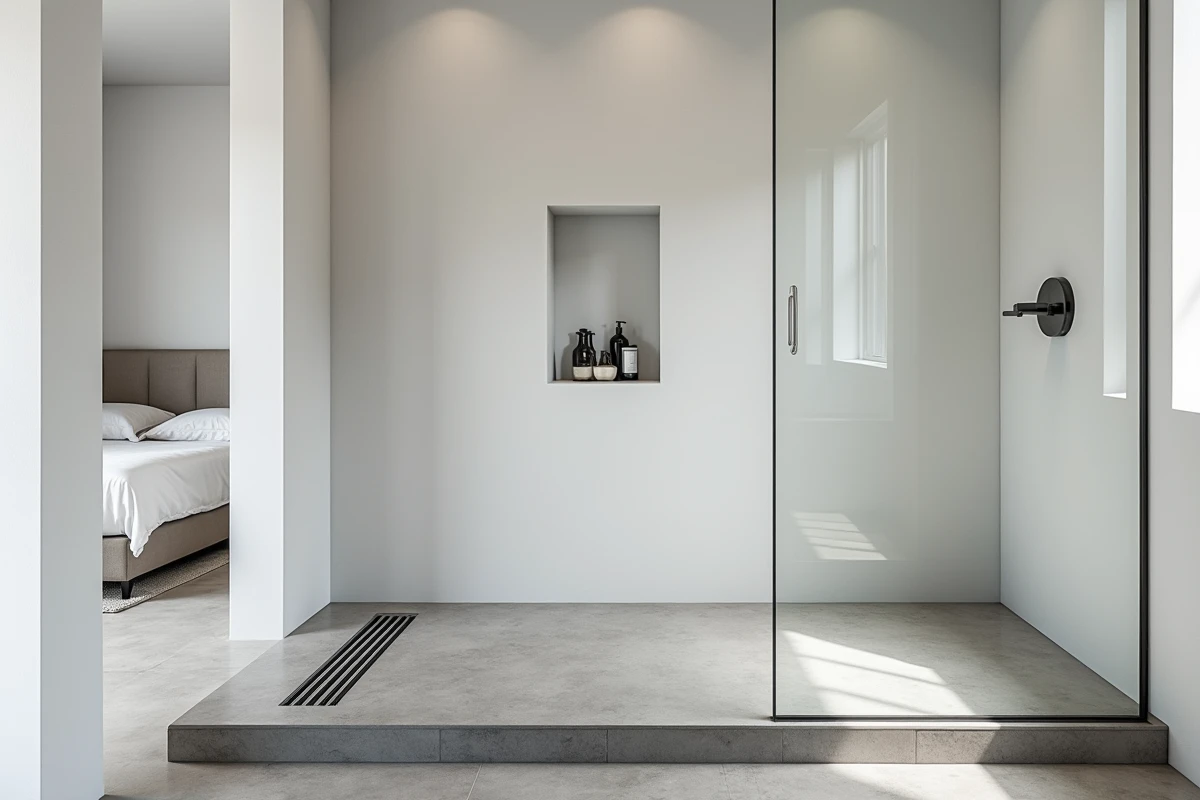
If the master suite includes a water area, the walk-in shower with an ultra-flat tray is the only option that does not create a visual break on the floor. The continuous tiling between the bedroom and the shower area enlarges the room.
Waterproofing requires a liquid waterproofing system (SPEC or equivalent) under the tiles and a proper floor slope towards the drain. This technical point is non-negotiable, to avoid water infiltration into the floor.
9. Layered lighting to modulate the ambiance
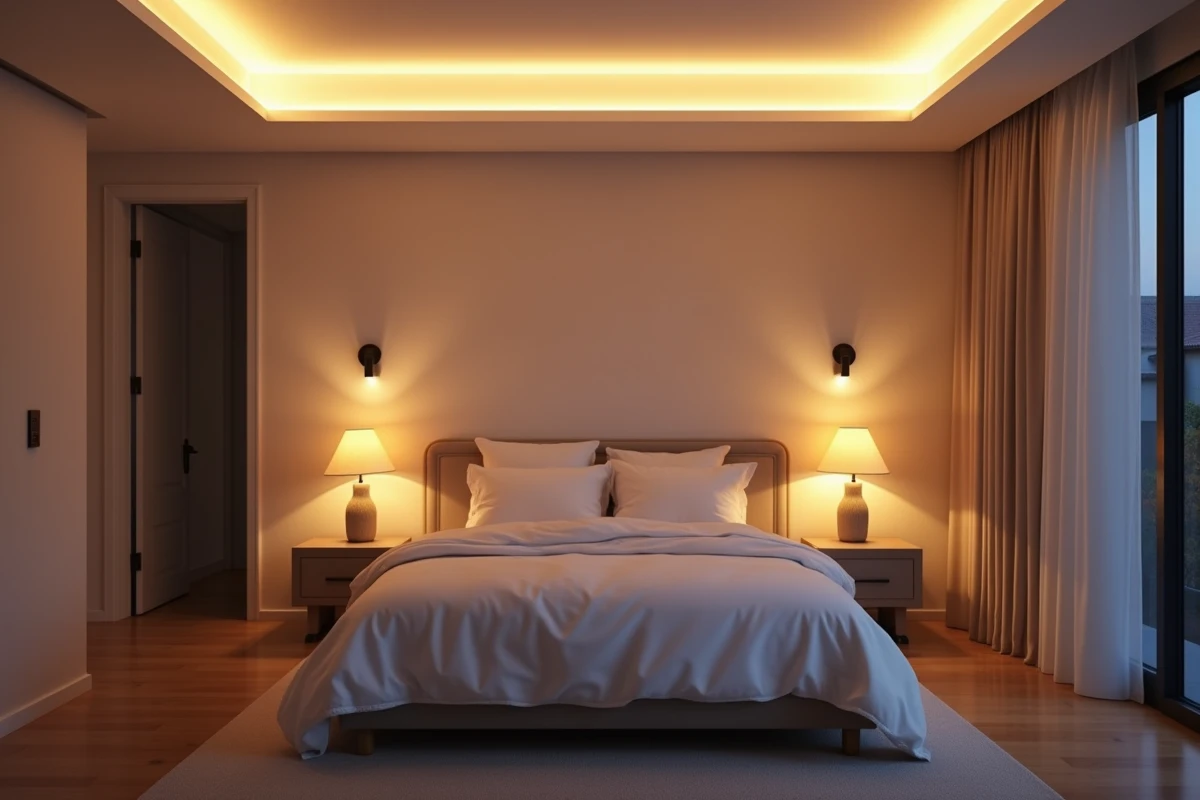
A single central ceiling light flattens the volumes and creates harsh shadows. By combining three sources, the room gains depth and comfort:
- An indirect LED strip behind the headboard or under a cornice, for general ambient lighting
- Two wall sconces or adjustable reading lights on each side of the bed, for reading without disturbing the other
- A recessed spotlight or a low-hanging fixture above the dressing area or vanity, for functional lighting
Three lighting sources are better than a single ceiling light in a compact space. Each source corresponds to a specific use, which avoids having to light the entire room all the time.
10. Wall-mounted furniture to free up the floor and facilitate cleaning
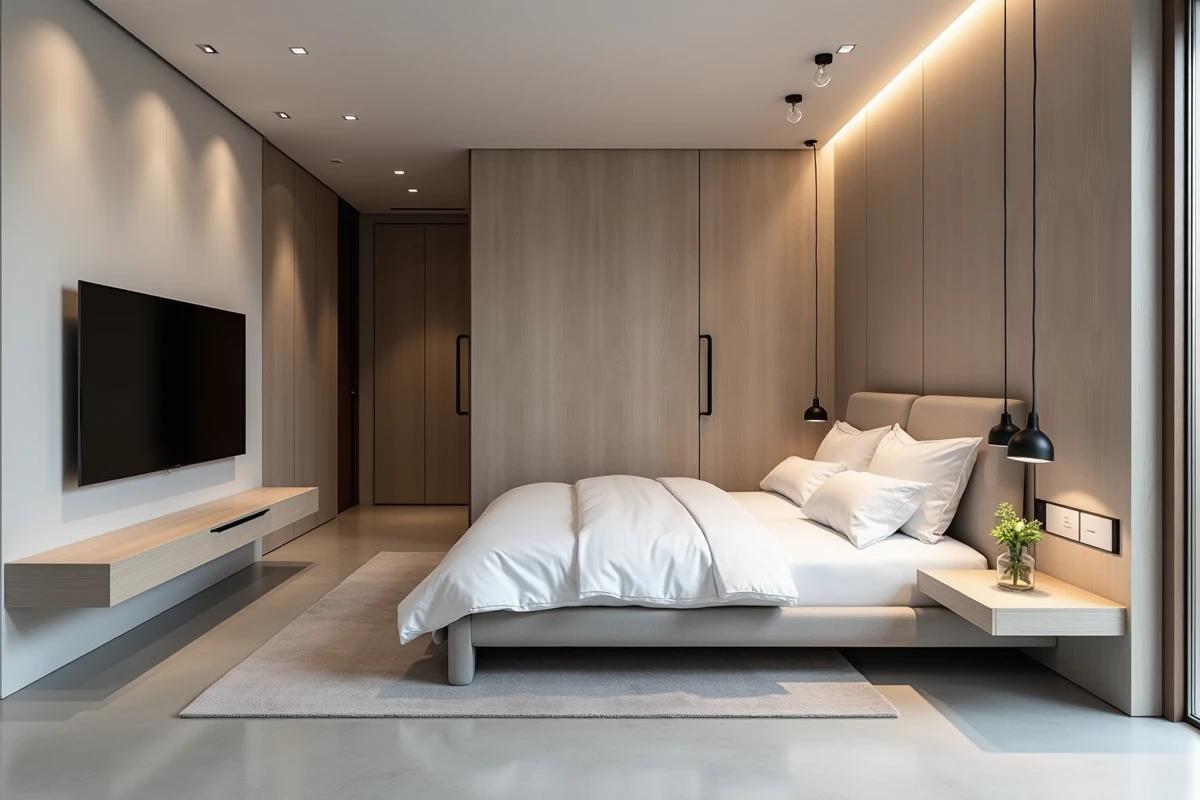
Mounting furniture on the wall (vanity, shelf, or even the bed itself) frees up the floor and creates a sense of lightness. The eye can see under the furniture, which visually elongates the room.
This approach also makes cleaning easier, a practical detail in a small space where dust quickly accumulates under floor-mounted furniture. The mounting must be done into a load-bearing wall or with appropriate anchors for the load, especially for a vanity filled with water.
Each of these solutions works on its own, but it is their combination that truly transforms a 15m2 master suite. The platform, glass partition, and pocket door free up usable space. Light colors, the mirror, and layered lighting enhance the perception of volume. The choice of wall-mounted furniture and the linear dressing area completes the whole without cluttering circulation.