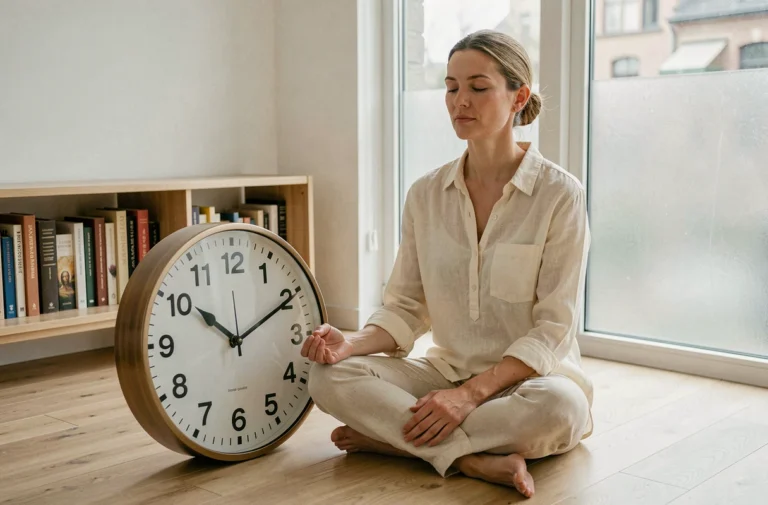
You get home from work, pick up the kids, prepare dinner, and your own health always comes last. The problem is that small imbalances that build up over time (cutting back on sleep, rushing meals, sitting at a desk all day) eventually have very real effects: persistent fatigue, muscle tension, and low mood. Taking care of yourself every day doesn’t mean changing everything; it means identifying the right habits and sticking with them.
Sedentary work: a risk distinct from physical inactivity
We often confuse a lack of exercise with sedentary behaviour. They are two separate issues. Someone who runs three times a week but sits for eight hours a day without a break still faces risks associated with prolonged immobility. Health authorities recommend standing up and walking for a few minutes at least once every hour to break up periods of sitting.
In practice, you can set a discreet alarm on your phone to remind yourself to move. Go and refill your water bottle, walk up and down the corridor, or take the stairs up one floor. It’s not exercise; it’s a break from sitting, and it’s just as useful as your weekend run.
To take this preventive approach further, Pharmanco’s health advice can help you build habits around practical guidelines tailored to your needs.
Daily physical activity: what official recommendations actually call for
The Ministry recommends that adults get at least thirty minutes of moderate-to-vigorous physical activity a day. Walking to work, taking the stairs, or gardening all count towards this total. Brisk walking as part of your daily commute is often the most realistic way to reach this goal without having to block out time in your schedule.

One point that’s often overlooked: strength training is recommended at least two non-consecutive days a week. You don’t need a gym. Bodyweight exercises (push-ups, squats, planks) done at home for ten to fifteen minutes are enough. The goal is to maintain muscle mass, which naturally declines with age and directly affects posture, balance, and metabolism.
If you only have short windows of time, two fifteen-minute sessions spread throughout the day are better than one hour on Sunday. Consistency brings more benefits than occasional bursts of intensity.
Restful sleep: consistency matters more than duration
We often hear about an ideal number of hours, but sleep quality depends above all on consistency. Going to bed and getting up at roughly the same time every day, including weekends, helps stabilise your body clock. The government points out that how you feel when you wake up is a more reliable indicator than the number of hours you spend in bed.
A clear warning sign is persistent daytime sleepiness despite apparently getting enough sleep. This mismatch may point to a sleep disorder worth discussing with a healthcare professional. This isn’t about feeling tired after lunch, but about a recurring urge to sleep that interferes with concentration.
Three changes to help you fall asleep
- Turn off screens (phone, tablet, computer) at least thirty minutes before bed. Blue light delays melatonin secretion and makes it harder to fall asleep.
- Keep your bedroom cool and dark. An overheated room disrupts sleep and reduces the time spent in deep sleep.
- Avoid caffeine after mid-afternoon. Its half-life varies from person to person, but its stimulating effects often last longer than you might think.
A balanced diet without obsessing: practical everyday guidelines
Eating a balanced diet doesn’t mean weighing your food or cutting out entire food groups. You can start with a simple goal: add a vegetable or a piece of fruit to every meal rather than cutting out the foods you enjoy. This approach of adding foods is easier to maintain over time than restrictive diets, which can lead to frustration and giving up.

A common pitfall is taking dietary supplements. According to the government summary citing Anses, they are rarely necessary for a healthy person who eats a varied diet. Some may even pose risks if taken in excessive amounts or alongside certain medications. Before taking any, seeking medical advice is the safest approach.
Hydration and meals: two simple habits to build
Drinking regularly throughout the day (preferably plain water) helps prevent mild dehydration, which can cause headaches and reduced concentration. Don’t wait until you feel thirsty to drink; it’s a habit worth building, especially in hot weather or when exercising.
When it comes to meals, skipping lunch to save time often leads to compensatory snacking in the late afternoon. Even a quick meal (a wholegrain sandwich with raw vegetables, a yoghurt, and a piece of fruit) helps keep blood sugar stable and prevents the mid-afternoon slump.
Stress and mental health: recognise the signs before burnout
Chronic stress is more than a psychological burden. It affects sleep, appetite, blood pressure, and the immune system. You can’t always eliminate its causes, but you can influence how your body responds to them.
Short techniques can help in everyday life: a few minutes of slow breathing (breathe in for four counts, breathe out for six) are enough to activate the parasympathetic nervous system and lower your heart rate. You don’t need to meditate for half an hour to see a measurable effect.
Recognising your own warning signs (unusual irritability, difficulty concentrating, muscle pain with no apparent cause) lets you take action before things get worse. Regular check-ups with your GP, at least once a year, are still the best opportunity to discuss these issues before a crisis arises.
Taking care of your health every day comes down to a few specific habits: break up sitting every hour, get thirty minutes of exercise a day, keep regular sleep hours, eat a varied diet without overcomplicating things, and pay attention to the signals your body sends. None of these steps requires spending money or completely rearranging your schedule. The hardest part is often getting started, not keeping it up.