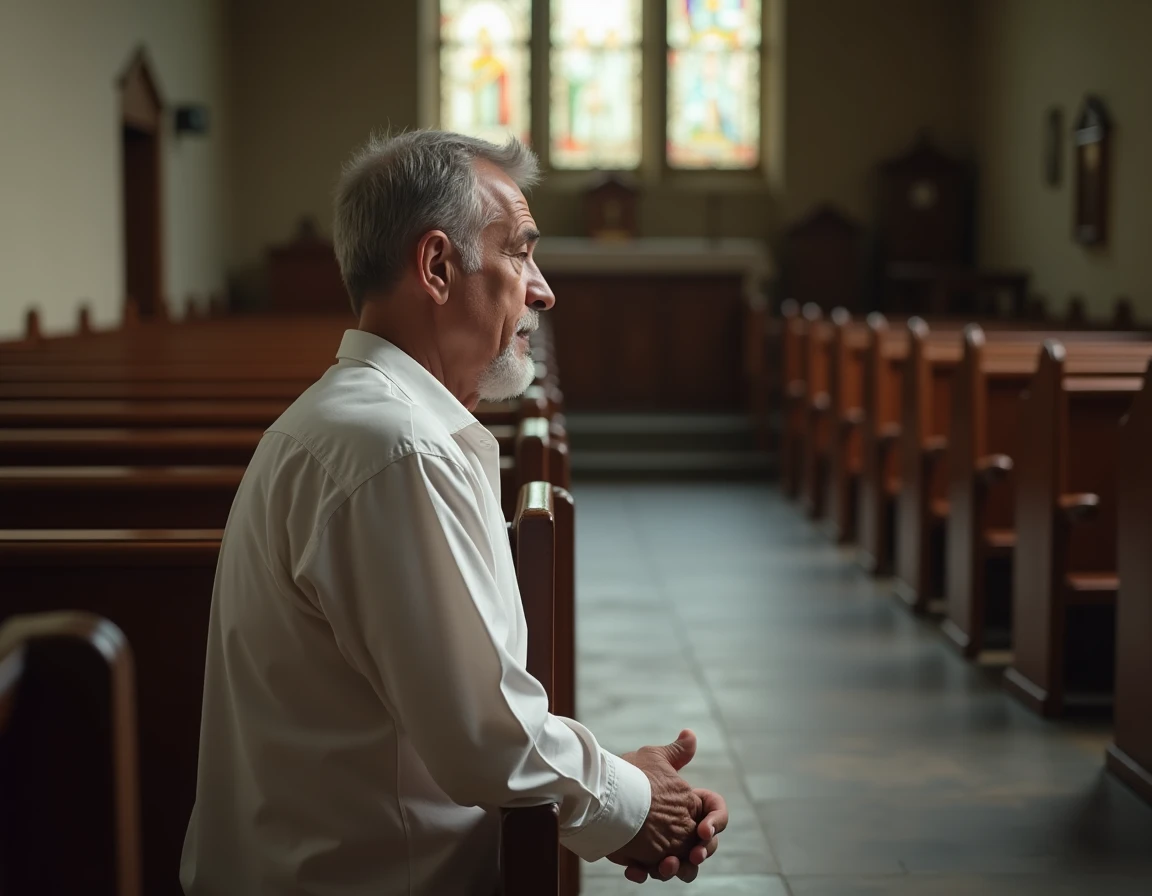
Yawning during prayer is perplexing. It often occurs within the first few seconds of reflection, even in individuals who felt no fatigue just moments before. This phenomenon spans religious traditions, from Muslim salat to Christian contemplative prayer, and raises the same question each time: why does my body seem to resist at the very moment my mind seeks to focus on God?
Yawning and the parasympathetic nervous system: what the body is really signaling
Most online discussions address yawning during prayer from an exclusively spiritual angle. Before delving into that, it’s essential to understand what happens physiologically, as that’s where a often overlooked key lies.
Recent studies on meditation and prayer show that contemplative practices activate the parasympathetic nervous system more: relaxation, muscle release, slow breathing. Yawning accompanies this shift towards a state of deep relaxation. It does not necessarily indicate a lack of attention, but rather a neurophysiological transition between two states of the nervous system.
Specifically, when you move from a daily activity (driving, cooking, working) to the prayer posture, your body changes mode. The heart rate slows, the jaw relaxes, and the breathing changes. Yawning is a marker of this transition, just like sighing or the urge to close your eyes. Klottra’s spiritual advice sheds light on this idea of a body-soul signal to decode rather than combat.
Thus, yawning is not necessarily a failure of concentration. It can be a useful indicator of the body’s state before prayer: level of accumulated fatigue, residual muscle tension, unbalanced lifestyle.
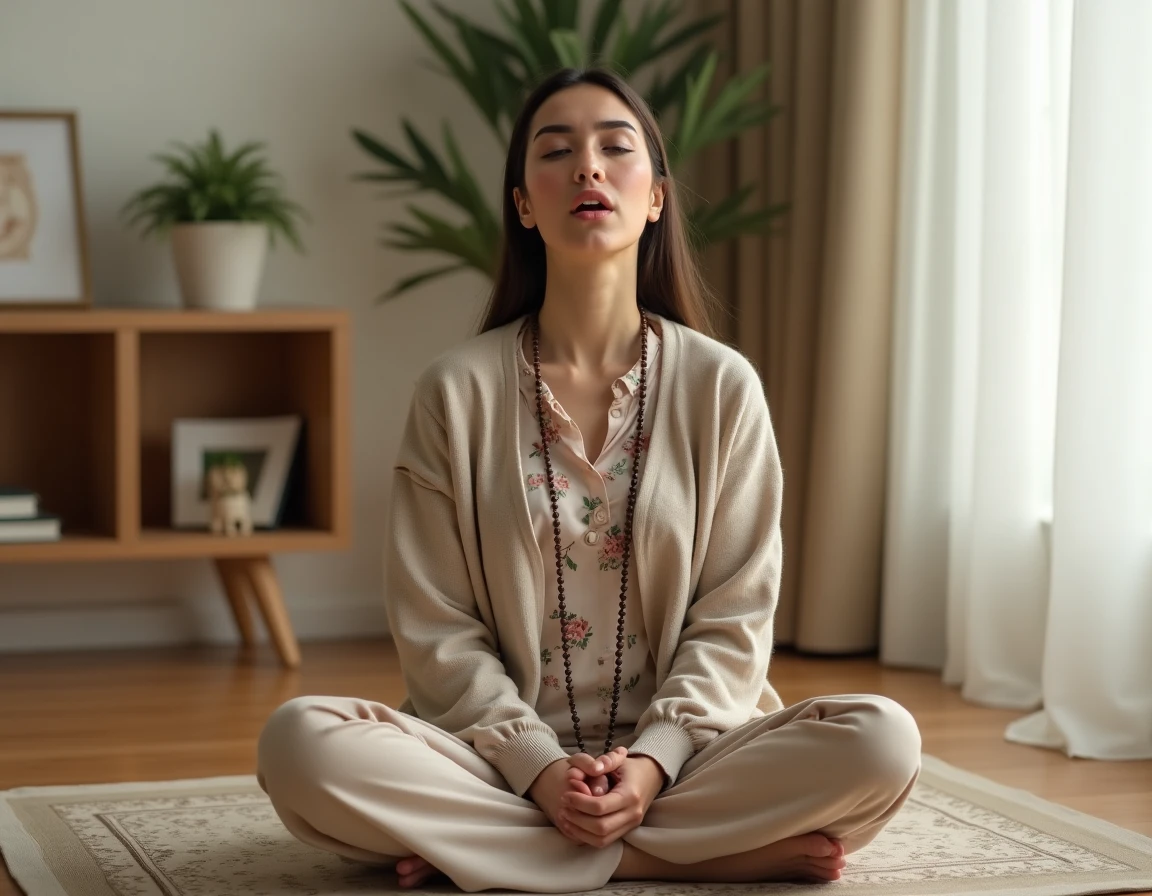
Yawning as a spiritual indicator of the body-soul state
Addressing yawning solely as a nuisance to eliminate misses out on valuable information. If you consistently yawn at the beginning of prayer, the question to ask is not “how do I stop this yawn” but “what does this yawn reveal about my overall state.”
Three avenues deserve exploration:
- Chronic fatigue: insufficient or poor-quality sleep often manifests when the body relaxes, precisely during prayer. Repeated yawning may signal a sleep debt that daily activities mask.
- Mental distraction: transitioning directly from a screen or a lively conversation to prayer creates a jarring gap between cognitive excitement and the posture of reflection. Yawning then reflects a discrepancy between mental rhythm and spiritual rhythm.
- Accumulated physical tension: hours spent sitting, contracted shoulders, shallow thoracic breathing—all of this releases suddenly when the body adopts the prayer posture, triggering the yawn reflex.
From this perspective, yawning becomes a diagnosis rather than a symptom to suppress. It invites adjustments to one’s overall lifestyle, not just one’s prayer technique.
Attention warm-up before prayer: a practice that reduces yawning
Converging experiences from various religious contexts indicate that a brief attention warm-up just before prayer significantly reduces the frequency of yawning. The principle is simple: instead of abruptly transitioning from daily activity to reflection, insert a transition of a few minutes.
This transition can take several forms depending on the tradition:
- A brief reading of a biblical or Quranic passage, quietly, for two to three minutes before starting the actual prayer
- The repetition of a dhikr (remembrance formula) or a short invocation, which gradually refocuses attention
- A guided silence of two to three minutes, eyes closed, concentrating solely on breathing
What’s at play here is managing the abrupt shift between activity and reflection. Yawning often occurs because the body hasn’t had time to adjust. Allowing this transition time is to prepare the physiological as well as the spiritual ground.
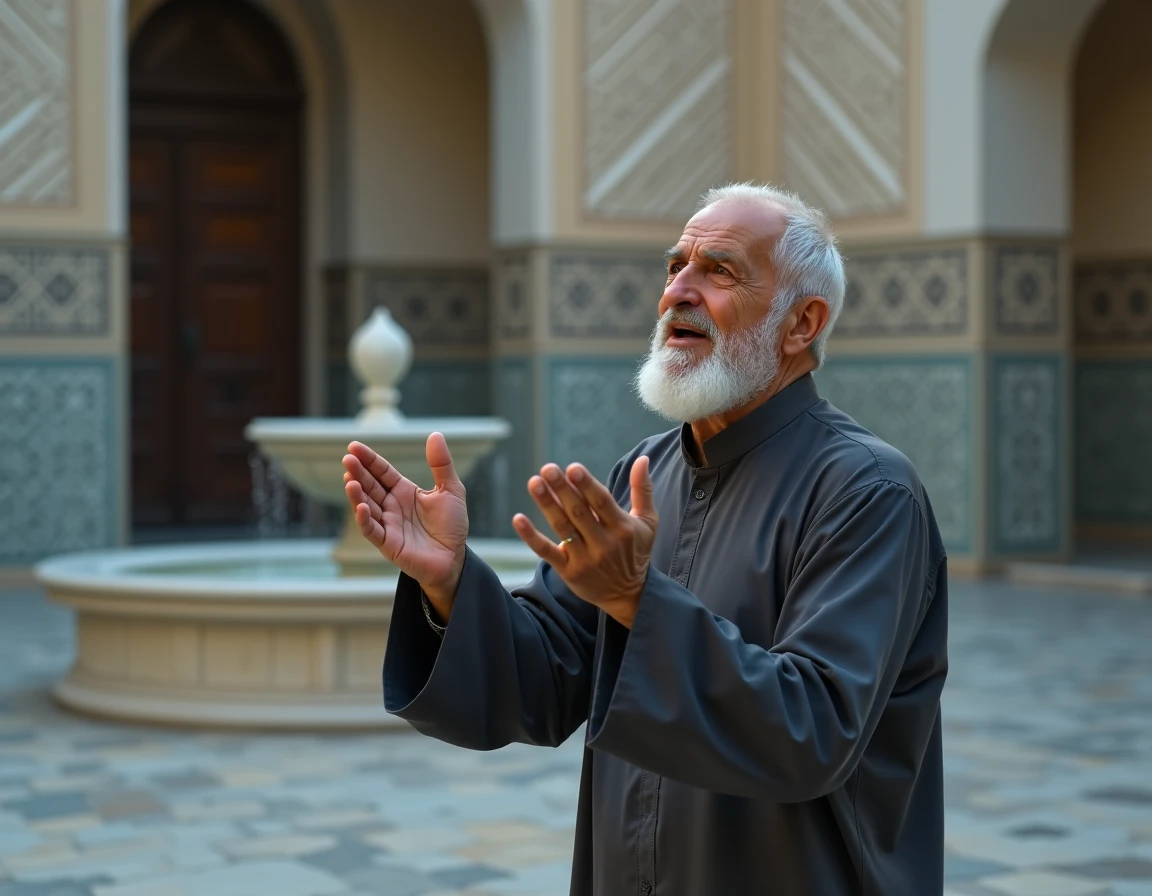
Yawning during prayer and spiritual struggle: what the texts say
In Islamic tradition, several hadiths attribute yawning to the influence of Satan. The Prophet instructed to resist yawning as much as possible and, when it occurs, to cover the mouth with the hand. This spiritual interpretation of the phenomenon is not unique to Islam: Christian traditions also associate yawning during prayer with a form of spiritual resistance, a struggle between the vigilance of faith and the forces of distraction.
These two perspectives (physiological and spiritual) are not mutually exclusive. Yawning can be both a reflex of the nervous system and a sign of a lack of spiritual vigilance. Islamic tradition, for example, recommends concentration (khushu) in prayer while acknowledging that Satan seeks to divert the believer.
The advice to cover the mouth is as much a gesture of bodily discipline as it is an act of spiritual resistance.
The available data do not allow us to conclude that every yawn during prayer stems from a single cause. Reducing the phenomenon to mere fatigue would be as reductive as attributing it solely to a spiritual attack. The most comprehensive response combines lifestyle hygiene, attentional preparation, and spiritual vigilance.
Adjusting one’s prayer practice in the face of recurring yawning
Revisiting the timing of prayer
If yawning consistently occurs at a specific time (evening prayer, for example), this points to a fatigue factor related to the daily rhythm. Praying at a time when the body is already energy-depleted makes the parasympathetic transition more abrupt, leading to more frequent yawning.
Modifying posture and breathing
A few deep, slow breaths before starting, accompanied by a discreet stretch of the shoulders or jaw, can be enough to mitigate the reflex. Yawning is partly a mechanism for regulating facial and thoracic tension: providing an alternative reduces its frequency.
Accepting the signal without guilt
Yawning during prayer does not mean that the prayer is empty or that faith is wavering. The body speaks, and what it says deserves to be heard rather than fought with frustration. A yawn welcomed as a signal leads to adjustment, while a yawn experienced as a failure leads to guilt, which in turn harms concentration.
Yawning during prayer remains a phenomenon that each believer experiences differently. What makes it interesting is that it lies exactly at the intersection of body and spirit, where physiology meets spiritual life. Rather than seeking to eliminate this reflex solely through willpower, the most fruitful approach is to make it a starting point for better self-understanding and preparation.