
The Toyota HDJ 100, produced between 1998 and 2007, is built on the 1HD-FTE engine, a 4.2-liter turbo diesel inline six-cylinder. This engine has forged the reputation of the Land Cruiser series 100 on African tracks and European roads. Despite its recognized mechanical robustness, certain recurring weak points deserve particular attention, especially on examples that often exceed several hundred thousand kilometers on the odometer.
OME Suspensions and Steel Bumpers: Reliability of the HDJ 100 After Off-Road Preparation
Most HDJ 100s in circulation have been modified. Old Man Emu suspensions, steel bumpers, winches, roof racks: these modifications transform the vehicle for off-road use, but their impact on reliability in mixed road/trail use is rarely detailed.
A steel bumper adds significant weight to the front axle. This overload puts more strain on the steering joints, hub bearings, and control arm bushings. The lifespan of the bushings decreases significantly with a permanent excess weight at the front, a finding shared by feedback from operators in the African mining sector where the HDJ 100 is unfavorably compared to the HDJ 79 on this specific point.
To explore in detail the reliability issues of the Toyota HDJ 100, the question of modifications remains an angle too often overlooked.
Raised suspensions (OME type) alter the geometry of the axle and drive shafts. In daily use, a poorly calibrated lift causes vibrations in the transmission and accelerates the wear of the drive shaft universal joints. The remedy involves precise adjustment of the axle correction shim, a step that many installers overlook.
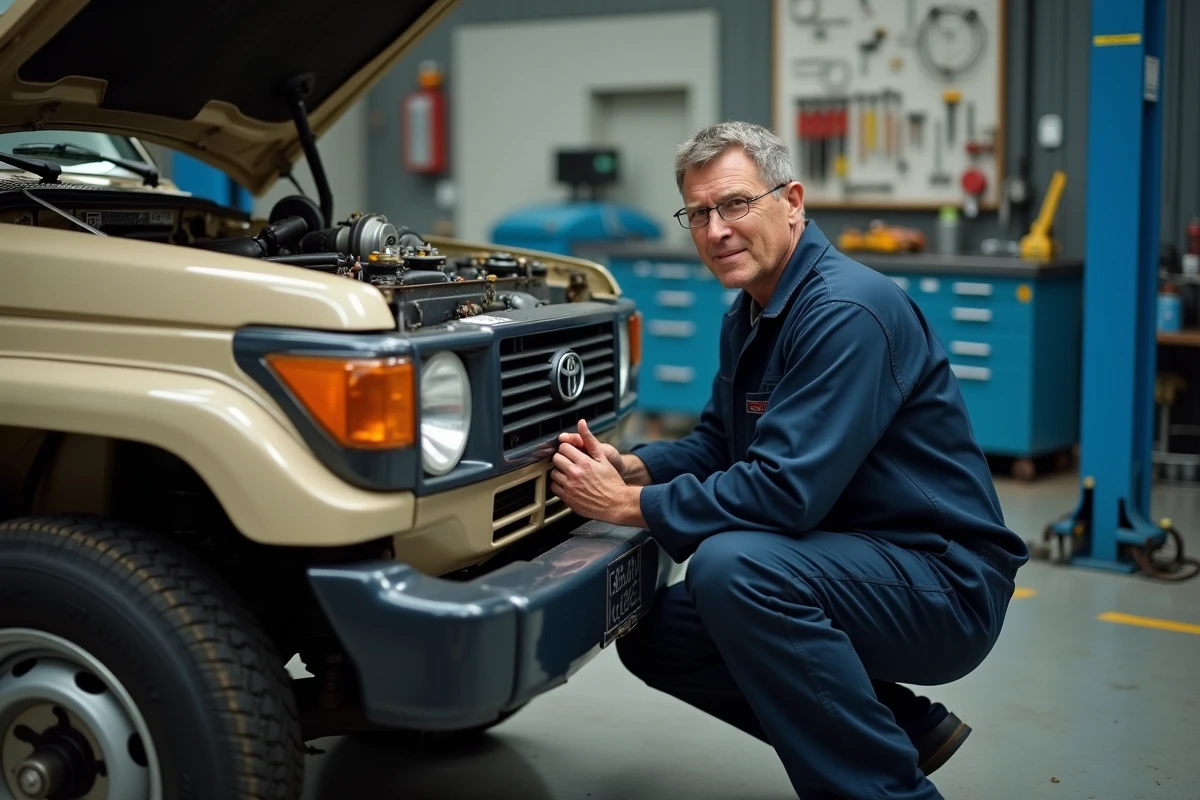
Diesel Injection Circuit of the 1HD-FTE: Injectors and High-Pressure Pump
The injection system of the 1HD-FTE constitutes the most expensive maintenance item of the HDJ 100. The mechanical injection pump ages relatively well, but the injectors show signs of fatigue at high mileage.
Worn injectors cause black smoke, loss of power, and excessive fuel consumption. The diagnosis relies on a flow test on a bench, the only reliable way to distinguish between a reconditioned injector and one that needs replacing. Reconditioning by a specialized diesel technician costs significantly less than a new set, often yielding equivalent lifespan results.
- Check injector returns at each oil change: excessive return flow indicates internal wear of the injector nozzle
- Replace the copper washers at the injector base during each removal to prevent compression leaks
- Use quality diesel fuel and add a sediment filter if the vehicle operates in countries where fuel is contaminated
The manual priming pump on the pre-filter also deserves regular checking. A punctured diaphragm allows air into the circuit, leading to difficult cold starts, a symptom often confused with a glow plug issue.
Glow Plugs and Cold Starting
Glow plugs frequently seize in the aluminum cylinder head of the 1HD-FTE. Forcing the extraction of a seized glow plug risks breaking the threads in the cylinder head, a costly repair. The preventive method involves removing and lubricating them with anti-seize every two to three years.
A442F Automatic Transmission and HDJ 100 Drivetrain
Versions equipped with the A442F four-speed automatic transmission have a known weak point: wear of the torque converter and degradation of the transmission oil in mixed use.
In off-road conditions at low speed, the automatic transmission heats up more than during highway driving. Owners who alternate between trails and daily commutes must change the transmission oil more frequently than recommended in the original maintenance manual. A regular partial oil change of the automatic transmission extends its lifespan well beyond what simple level monitoring can achieve.
The manual transmission, when available, poses fewer problems. The clutch remains the main consumable, with accelerated wear if the vehicle tows or operates on steep terrain with excess weight.
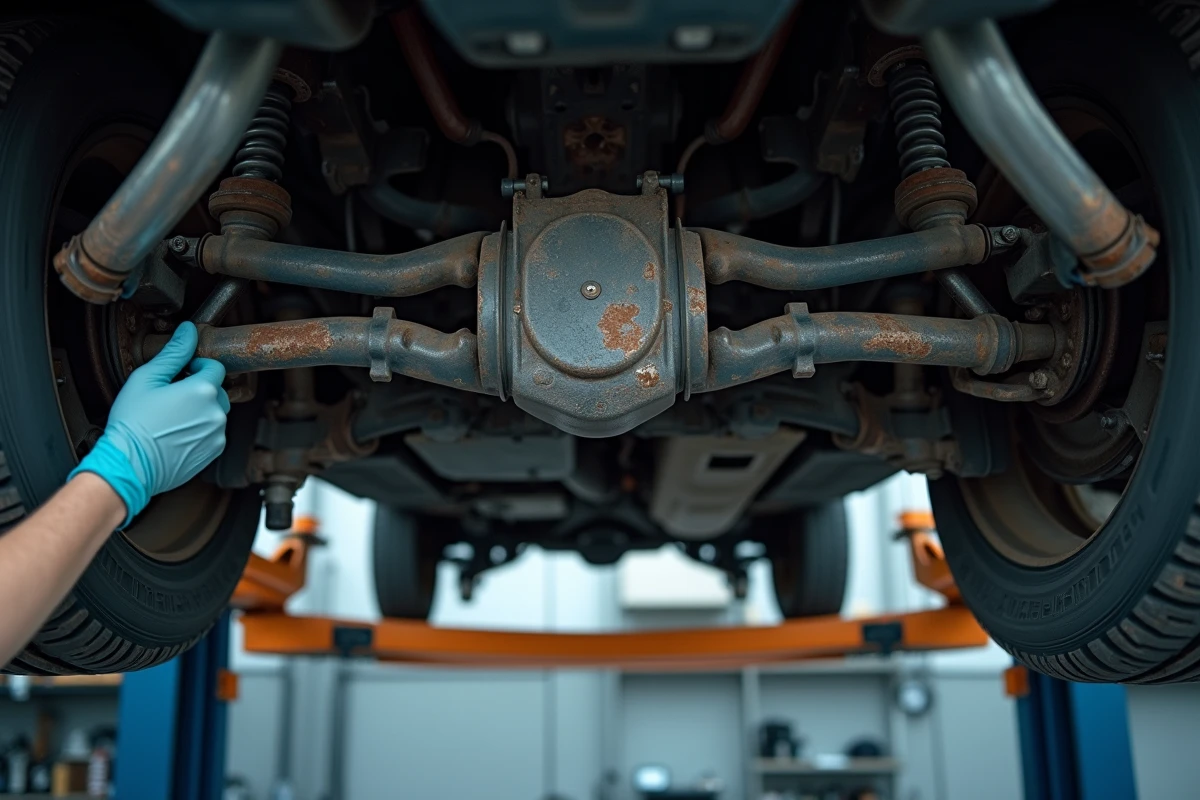
Chassis Corrosion and Inspection Points on a Used HDJ 100
The ladder frame of the HDJ 100 is robust but not immune to corrosion. The most exposed areas are at the rear leaf spring mounts, central cross members, and brake cable passages.
- Inspect the frame rails at the spring anchor points: corrosion sometimes perforates from the inside out, invisible on the surface
- Check the cross members under the transfer case, an area exposed to splashes and trapped moisture
- Inspect the rear wheel arch liners, where mud accumulates and retains moisture
- Examine the condition of the rigid brake lines, often corroded before the chassis itself
A chassis treated with tar or wax by the previous owner may mask advanced corrosion. Hammer testing remains the most reliable method to assess the remaining thickness of the steel.
Preventive Chassis Maintenance After Off-Road Use
After each outing in muddy terrain or by the sea, a high-pressure wash of the undercarriage limits moisture retention. Applying a wax-based anti-corrosion product to bare areas completes the protection.
The HDJ 100 remains a vehicle whose longevity directly depends on the rigor of maintenance. Well-maintained examples, even heavily modified, continue to operate at mileages that few modern vehicles achieve. The main point of vigilance when purchasing focuses less on the engine, often durable, than on the condition of the chassis and the history of modifications: two elements that determine the actual reliability for the coming years.